


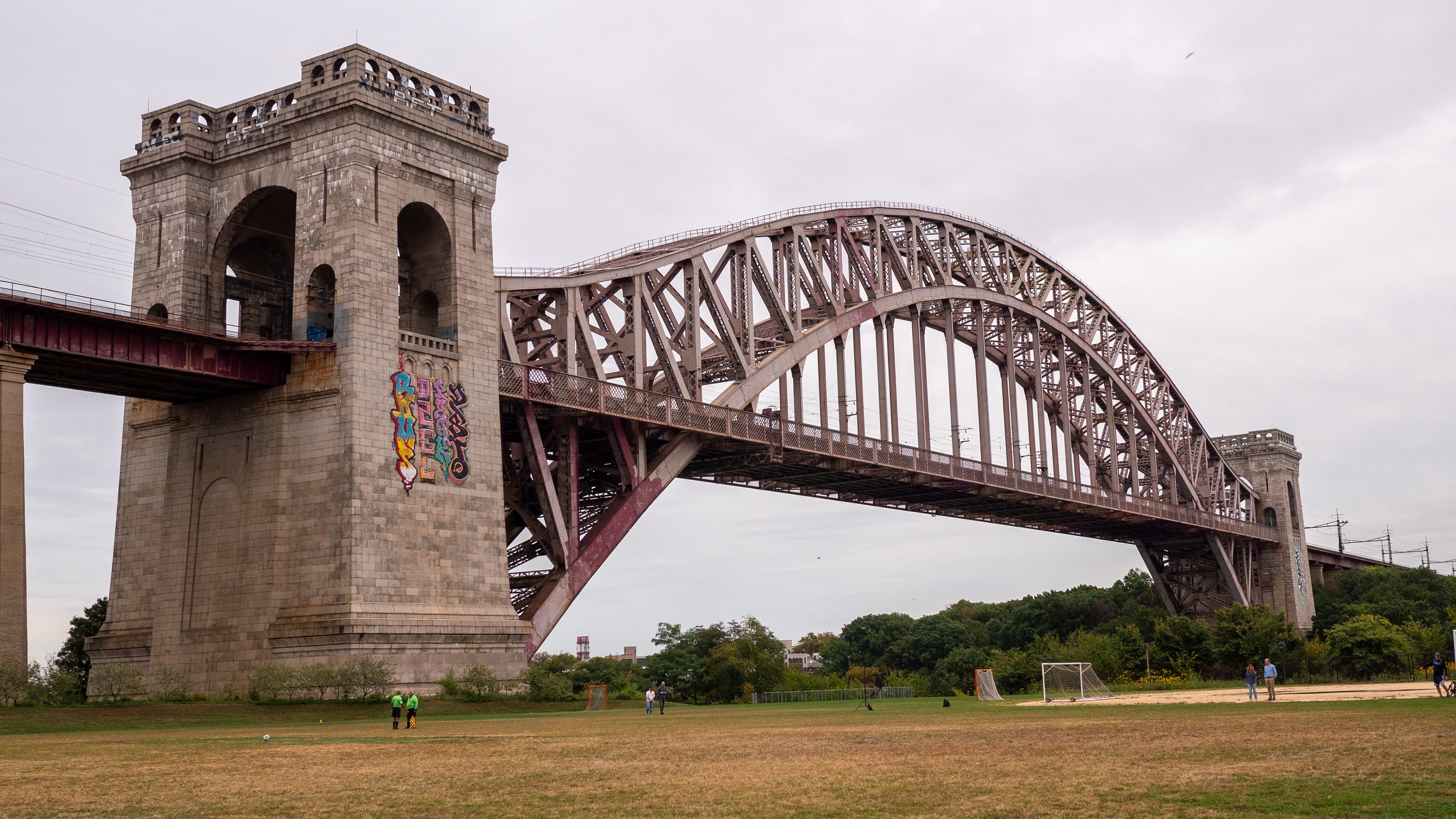
Travelling by train between New York City and Boston takes passengers on a snaking route through New York’s boroughs. Soon after leaving Manhattan, the journey passes through Brooklyn, into Queens and back across the East River into the Bronx, before heading out of the city.
When making that final crossing of the East River, train riders would be forgiven for thinking they’ve traversed an otherwise unremarkable rail bridge. But ask any Australian, and that bridge will be instantly recognisable as one of Sydney’s most iconic landmarks.
There, in the middle of New York City, sits the Sydney Harbour Bridge – or at least its original design, which Sydney copied, expanded and made its own.
Its name – the Hell Gate Bridge – is an unfortunate corruption of the Dutch term Hellegat, meaning “bright gate” (or perhaps a reflection of the long-held opinions that hardcore New Yorkers and Bostonians have of each other’s cities, as connected by the bridge’s rail line).
The Hell Gate Bridge sports the same “through-arch” design and predates the Sydney Harbour Bridge, with construction completed in 1916 — a full seven years before work began on its Sydney counterpart.
In recent times, the New York edition has been called ‘ugly’, ‘a good place to hide from zombies’ and ‘a crumbling symbol of urban decay’. Yet when it opened, it was lauded as an engineering triumph, and consistently described as one of the most beautiful bridges in the world.
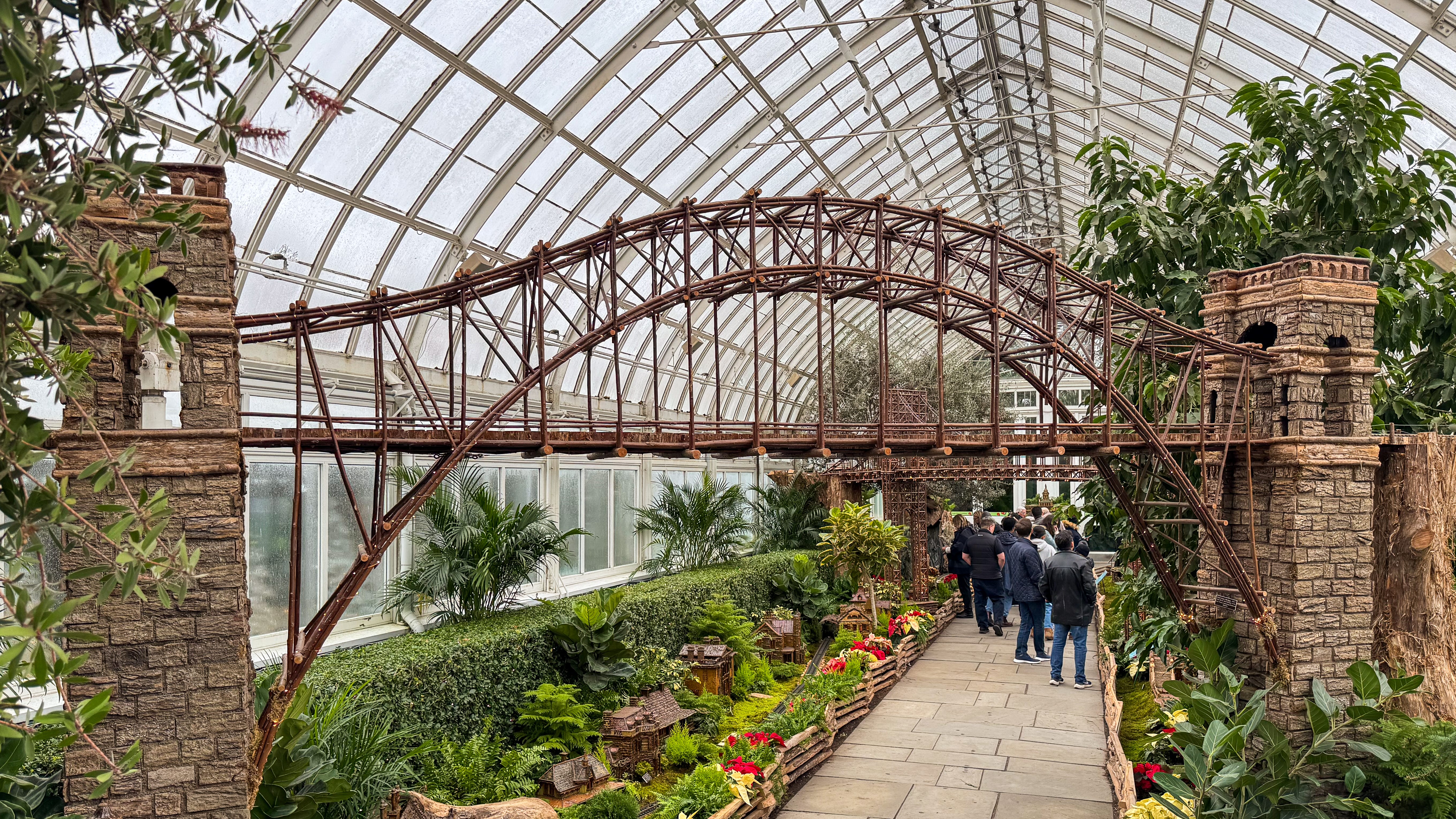
Today, it is often ranked among New York City’s more ironic landmarks - notable for a city that has no lack of landmarks - and features in the New York Botanical Garden’s annual Christmas model train display.
And Hell Gate is undoubtedly the inspiration for the Sydney Harbour Bridge.
A note from Tempests and Terawatts
After a longer-than-expected hiatus, Tempests and Terawatts will return in 2026 to provide its usual semi-regular analysis and updates on climate science, policy and politics.
This piece is a is intended as a piece of lighter summer reading - a brief pause from the heavy and relentless climate crisis which dominated much of 2025 and which will, inevitably, continue to shape coverage in the year ahead. 2026 is already setting a frantic pace. Trump’s wild kidnapping of a world leader in pursuit of billions in oil is an early example, and no doubt it’s only start of the story.
Thank you for continuing to read and support Tempests and Terawatts. If you are not already, please consider signing up to receive future updates.
But the setting of each bridge couldn’t be more different. While the Harbour Bridge spans Sydney’s iconic Harbour, casting shadows on landmarks that include the Sydney Opera House, the Hell Gate Bridge spans a rather less impressive part of New York.
Finding a good vista of the Hell Gate Bridge proves difficult. It connects the Queens neighbourhood of Astoria with the Randalls and Wards Islands, with the conjoined islands shielding the bridge from Manhattan. The islands themselves provide the best view of the Hell Gate Bridge but are probably the least appealing part of the otherwise dynamic and tireless New York City. The islands, bounded by the East and Harlem Rivers, are home to essential but unglamourous public infrastructure serving the city’s 8.8 million inhabitants, including public parks, a sewage treatment plant, an operating psychiatric hospital, a homeless shelter.
The Hell Gate Bridge was designed by Gustav Lindenthal, an engineer who emigrated from Austria to the United States in pursuit of a career in bridge-building. Remarkably, Lindenthal had no formal qualifications in engineering or construction, having taught himself mathematics, metallurgy and engineering concepts. The lack of formal qualifications apparently an impediment to his career in Europe, it posed no obstacle to his ability to find work in the United States. Lindenthal later played a leading role in the design and construction of the neighbouring Queensboro Bridge, which adopts a distinctive cantilever design.
In Sydney, in response to the increasingly urgent need to connect two halves of a rapidly growing city – the northern to the southern shore of the harbour – a competitive tender was run to solicit designs for a new Sydney Harbour Bridge. The tender was launched in 1922 (just five years after the Hell Gate Bridge was opened) following persistent advocacy by Australian engineer John Bradfield, the bureaucrat who ultimately oversaw its design and construction.
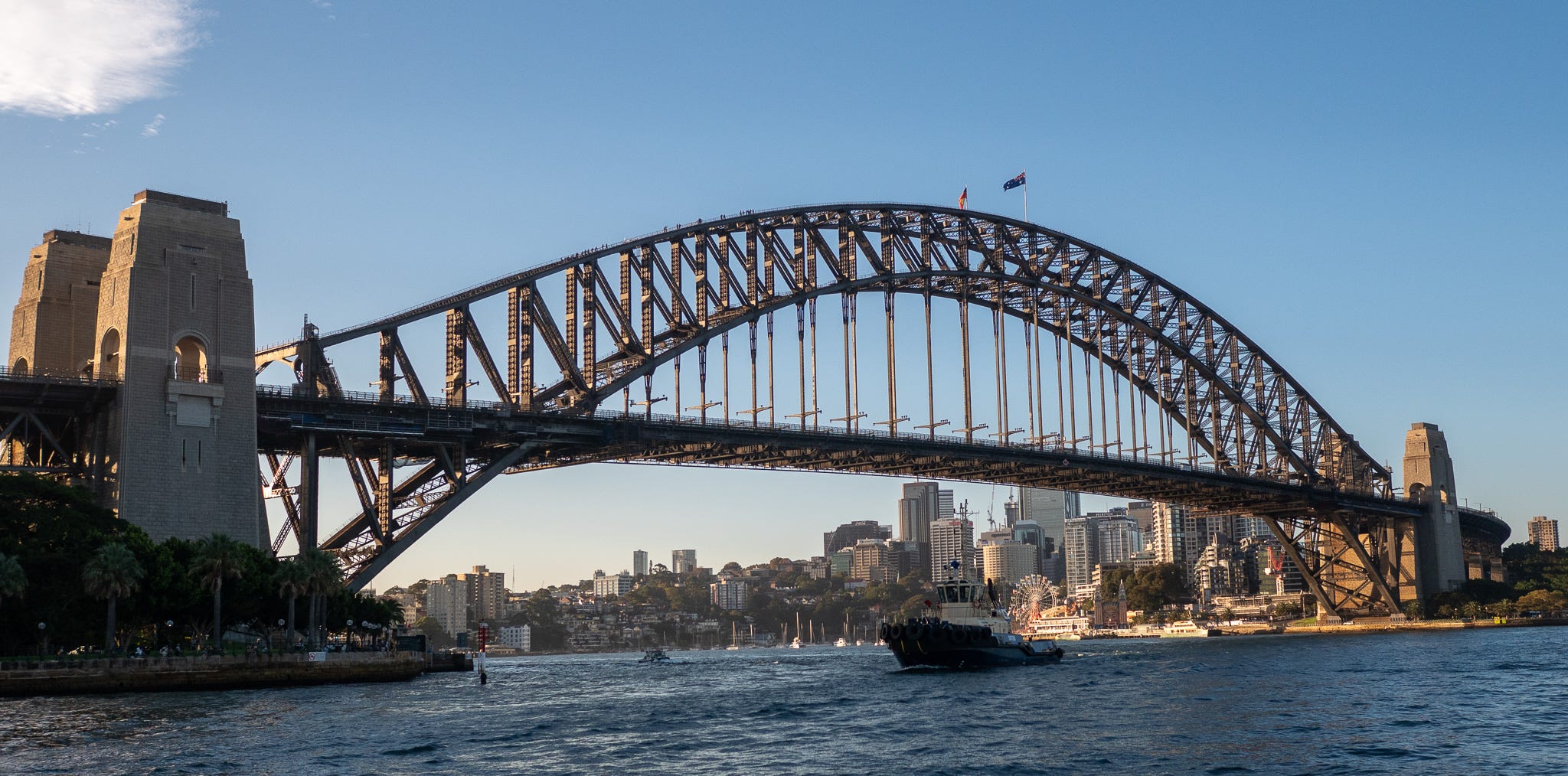
In its successful bid, British bridge builders Dorman Long copied and then scaled up the Hell Gate design to meet Sydney’s needs, almost doubling its span and the width of the bridge deck to enable car and pedestrian usage.Dorman Long subsequently repurposed the design for the nearly identical Tyne Bridge in Northeast England.
Collaborating with the American construction firm McClintic Marshall, Lindenthal contributed to the preparation of alternative designs for Sydney’s new Harbour Bridge. Despite his pivotal role in producing the Hell Gate Bridge design, McClintic Marshall’s ultimately rejected proposals included a more conventional and ‘less grand’ suspension bridge that would have mirrored the Manhattan and Brooklyn bridges – other bridges that also cross New York’s East River.
Bradfield is credited with the design and construction of the Sydney Harbour Bridge, but the structure is, at its core, Lindenthal’s conception — a pioneering example of long-span through-arch design.
The Sydney Harbour Bridge is the most impressive example of the design: the longest and widest of its kind and distinguished further by its dramatic crossing of Sydney Harbour and its impressive position of dominance within the Sydney skyline. It plays host to the city’s New Year’s fireworks spectacular, helping the world to kick off New Year celebrations.
Lindenthal’s aesthetically ambitious design may be maligned in New York, but in Sydney, it gets the limelight – and the fireworks - it deserves.