


Accelerated investments in renewable energy, electric vehicles, and energy efficiency are the key to avoiding a repeat of global energy market disruptions caused by the ongoing Hormuz crisis, a major new report from the International Energy Agency (IEA) has detailed.
In the latest edition of its World Energy Outlook published this week, the IEA says the scale and length of the current energy crisis – caused by conflict in the Strait of Hormuz that has massively disrupted the flow of oil and gas – has triggered a permanent restructuring of global energy systems, with renewables and electric vehicles possibly emerging as major winners, and gas exporters as major losers.
The IEA’s executive director Fatih Birol said the latest energy crisis is likely to have had an irreversible impact on global energy systems.
“The Hormuz crisis has delivered a huge shock to the system. While the energy sector and the global economy have shown considerable resilience, the longer the crisis lasts, the deeper the effects will be. And I don’t see any credible pathway for the energy world to return to the way it was before,” Birol said in a statement.
The Hormuz crisis has underscored just how vulnerable the world’s flows of fossil fuels are to conflict and disruption. The IEA’s report describes the Hormuz crisis as the “largest threat to energy security in history, one that dwarfs the scale of the oil shocks of the 1970s.”
The Hormuz crisis is the second major disruption to fossil fuel markets within five years. In both cases, fossil fuel companies, especially oil and gas producers, have reaped massive war profits due to the disruption caused to energy flows.
But the IEA’s report suggests that the war profit sugar-hit is likely to be temporary, and that a resolution of the crisis could trigger a collapse in oil and gas prices, if and when the Strait of Hormuz is fully re-opened.
Furthermore, the prolonged, but temporary, period of inflated fuel prices has driven consumers to make permanent reductions in their fossil fuel use by shifting to alternative technologies, particularly electric vehicles. This “demand destruction” sees consumers achieving permanent reductions in their fuel consumption even when prices return to lower levels.
These trends would ultimately pose a significant challenge to the long-term viability of fossil fuel companies, as the profitability of projects is eventually eroded. Gas companies investing in new and expanded production capacity could also find themselves trying to sell gas into a global market with permanently surpressed demand.
Under a new scenario that has been added to the World Energy Outlook for the first time, dubbed the “Additional Response Case” (ARC), the IEA models new policy responses that work to reduce global dependence on international fossil fuel trade. For example, to minimise the risk of repeat disruptions to energy systems – including the price shocks that have driven fuel prices to unprecedented levels in many countries – the IEA suggests that countries should ramp up investment in domestic energy capabilities.
For most countries, including Australia, this means expanding investment in renewable energy production – wind and solar – along with accelerating the electrification of energy consumption.
Under the ARC scenario, the IEA projects that global LNG supply would significantly exceed future demand, leading to a substantial glut in the global gas market.
“If such an outcome on the demand side were to coincide with full availability of supplies from existing and under-construction LNG export facilities, this would bring a large surplus of LNG supply over demand,” the report says.
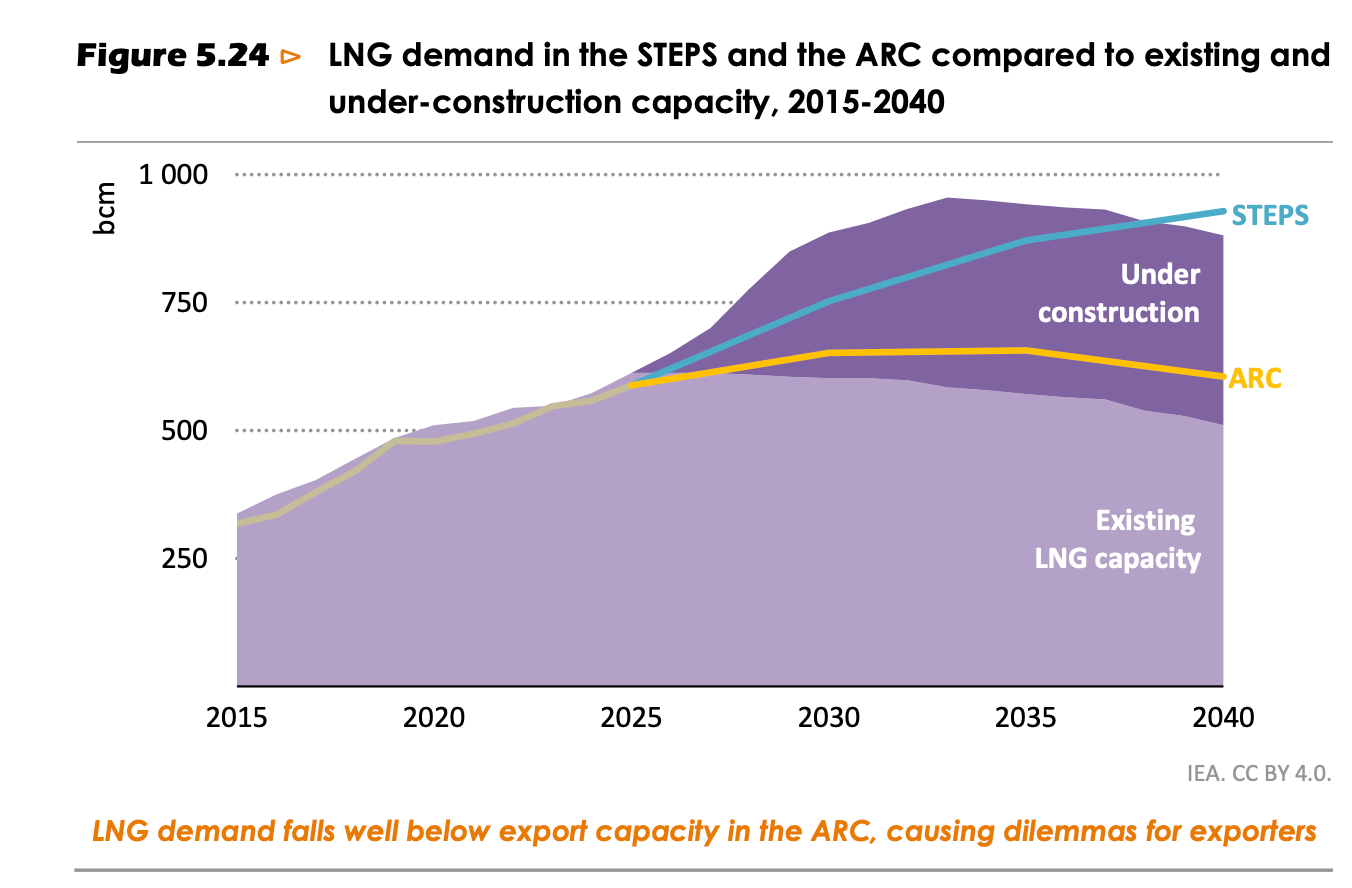
This is particularly bad news for the developers of new or expanded LNG facilities, such as Australia’s Woodside Energy and its pursuit of new gas export capacity at Browse, Scarborough and the North West Shelf.
According to the IEA, the response to the Hormuz crisis is already evident, and is driving a new boom for renewables.
“Renewables are already the technologies of choice in the power sector in many parts of the world and are set to get a further boost from the tilt towards homegrown energy. The 2025 increase in solar PV generation, 600 terawatt-hours (TWh), was the third largest ever achieved by any energy source in a single year,” the 2026 World Energy Outlook says.
“Trade data for 2026 show a rapid increase in imports of solar PV modules and batteries to countries in Africa and Asia strongly affected by the crisis. There is ample supply available. Current global manufacturing capacity for both technologies is roughly twice the volumes deployed in 2025, contributing to intense competition and falling prices.”
“Countries cannot fully insulate themselves from international markets, nor would it be desirable to do so. Energy trade brings huge benefits, allowing countries to access cheaper resources that they lack at home,” the report adds. “But, over time, electrification – underpinned increasingly by domestically available renewables – promises to shift the energy system towards a fundamentally different model, with a more stable and predictable retail electricity price becoming the main component of consumer energy bills.”
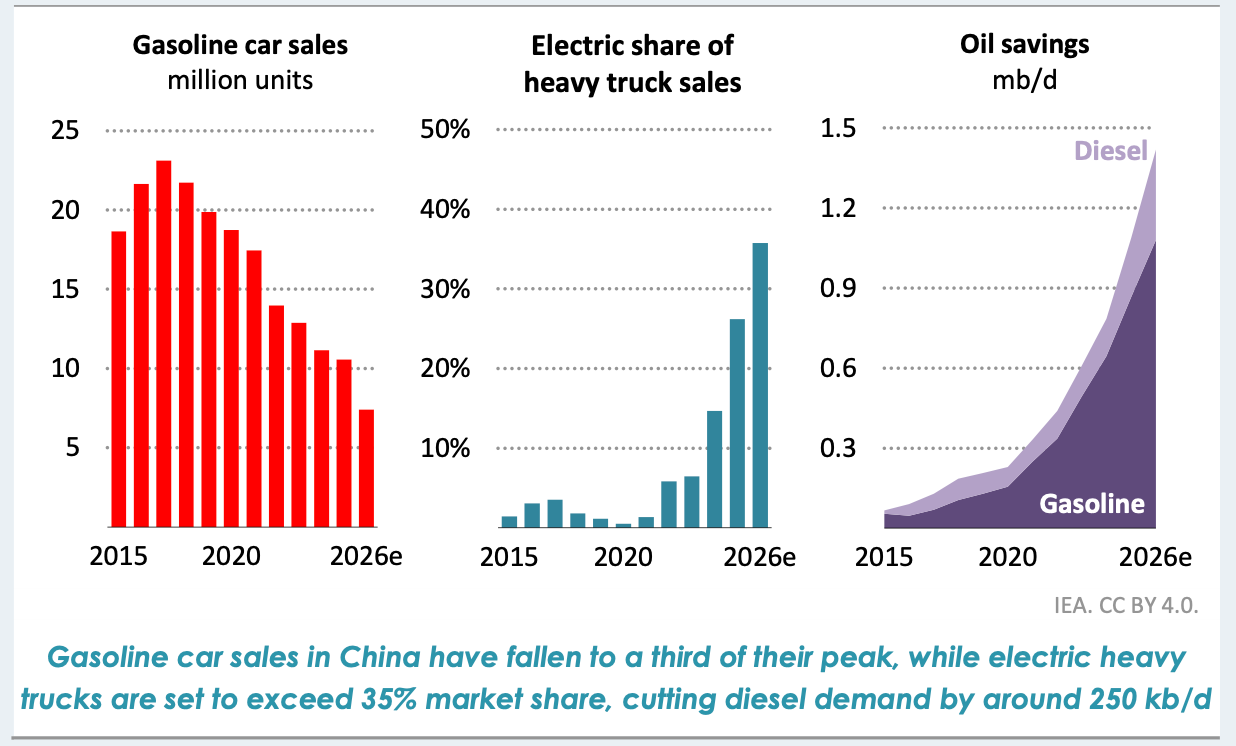
The IEA’s data already points to the Hormuz crisis driving a step-change in the adoption of electric vehicles in China, where electric options now represent more than a third of new heavy truck sales, and the recent surge in fuel prices has worked to accelerate adoption.
The IEA’s report has clearly been timed to coincide with the COP31 climate negotiations underway in Türkiye. The future of fossil fuels has been front-and-centre at these talks, and the report includes some important data points on the extent to which countries must ramp up their commitments to decarbonisation.
The UNEP recently reported that insufficient progress towards reducing emissions has put global temperatures on track to blow past the 1.5-degree goal of the Paris Agreement, and that we must now plan and prepare for a warming ‘overshoot’, with temperatures on a trajectory to at least 1.8 degrees under best-case scenarios.
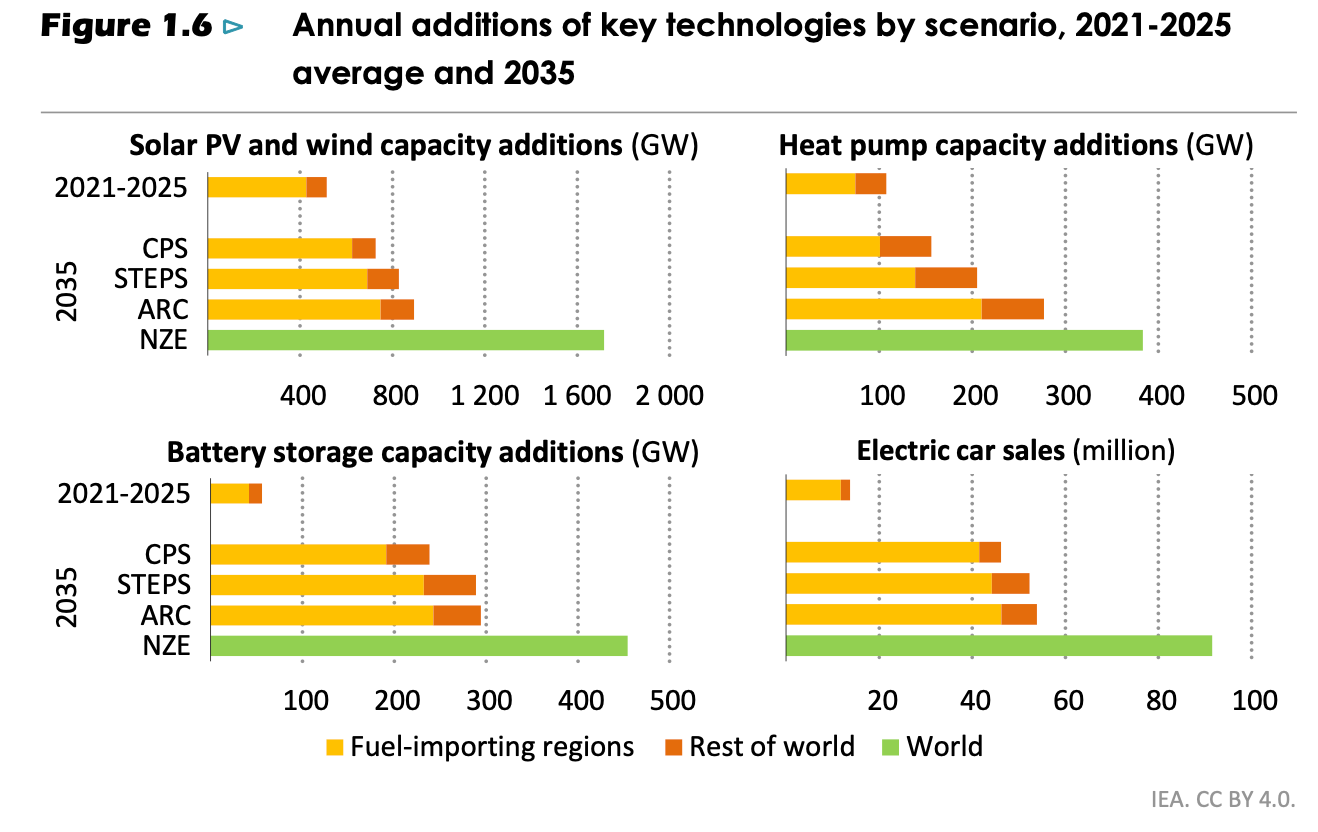
The IEA’s report shows that the deployment of zero-emissions technologies still needs to grow significantly to achieve global net zero targets. This includes a need to achieve a three-fold increase in wind and solar deployment and a five-fold increase in electric vehicle sales within the next decade.
That fossil fuel supplies are vulnerable to conflict is not a particularly new revelation; Russia’s invasion of Ukraine had already shown how conflict and disruption to fossil fuel production can have flow-on consequences at a global level.
But the IEA’s report outlines the extent to which repeated disruptions to energy markets can drive a more fundamental restructuring of how countries source and consume energy. Renewable energy technologies represent a more secure source of energy supply for many countries, as they can be produced domestically and the flow of wind and solar cannot be disrupted or controlled by any one country – provided the production of renewable energy and electric vehicle technologies is sufficiently diversified.
Faster adoption of electric vehicles, industry transformation and the growth of new green industries are as much an investment in energy security and resilience as they are in mitigating global warming.